How restoration work is actually priced
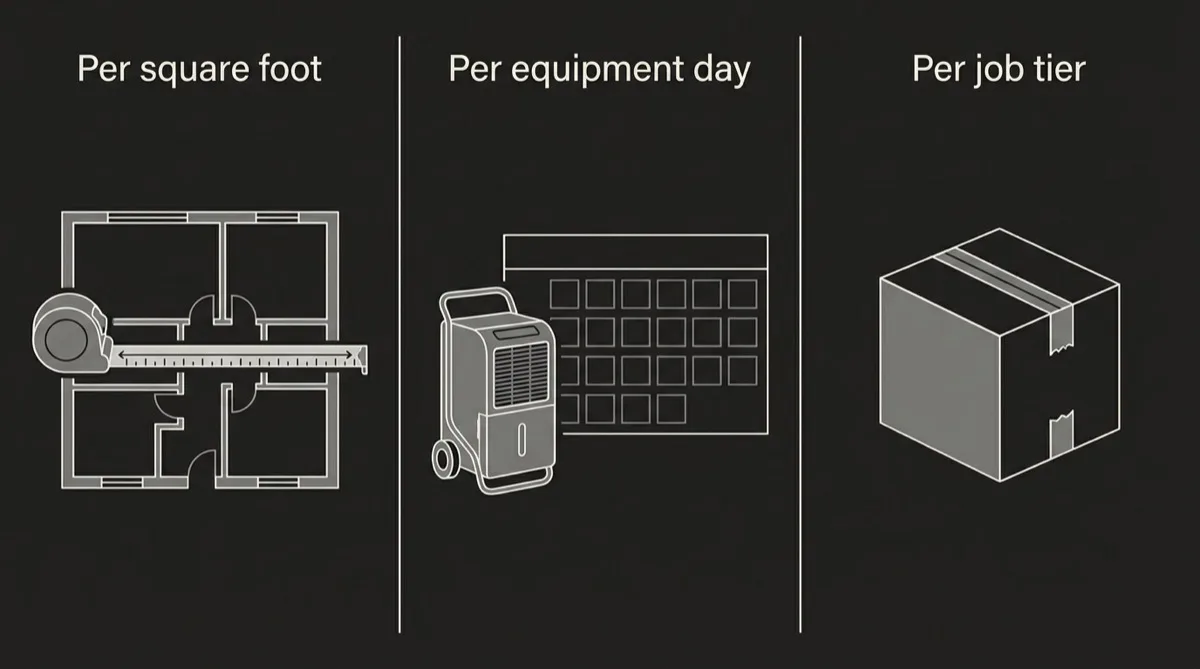
Toronto restoration work is billed three ways: a rate per square foot of affected area, a charge per day of drying equipment on site, and a flat tier for a whole job class. The same basement lands in a different band under each, which is why two quotes can be far apart and both be arithmetic.
Page last updated: By The RestorationIndex Desk
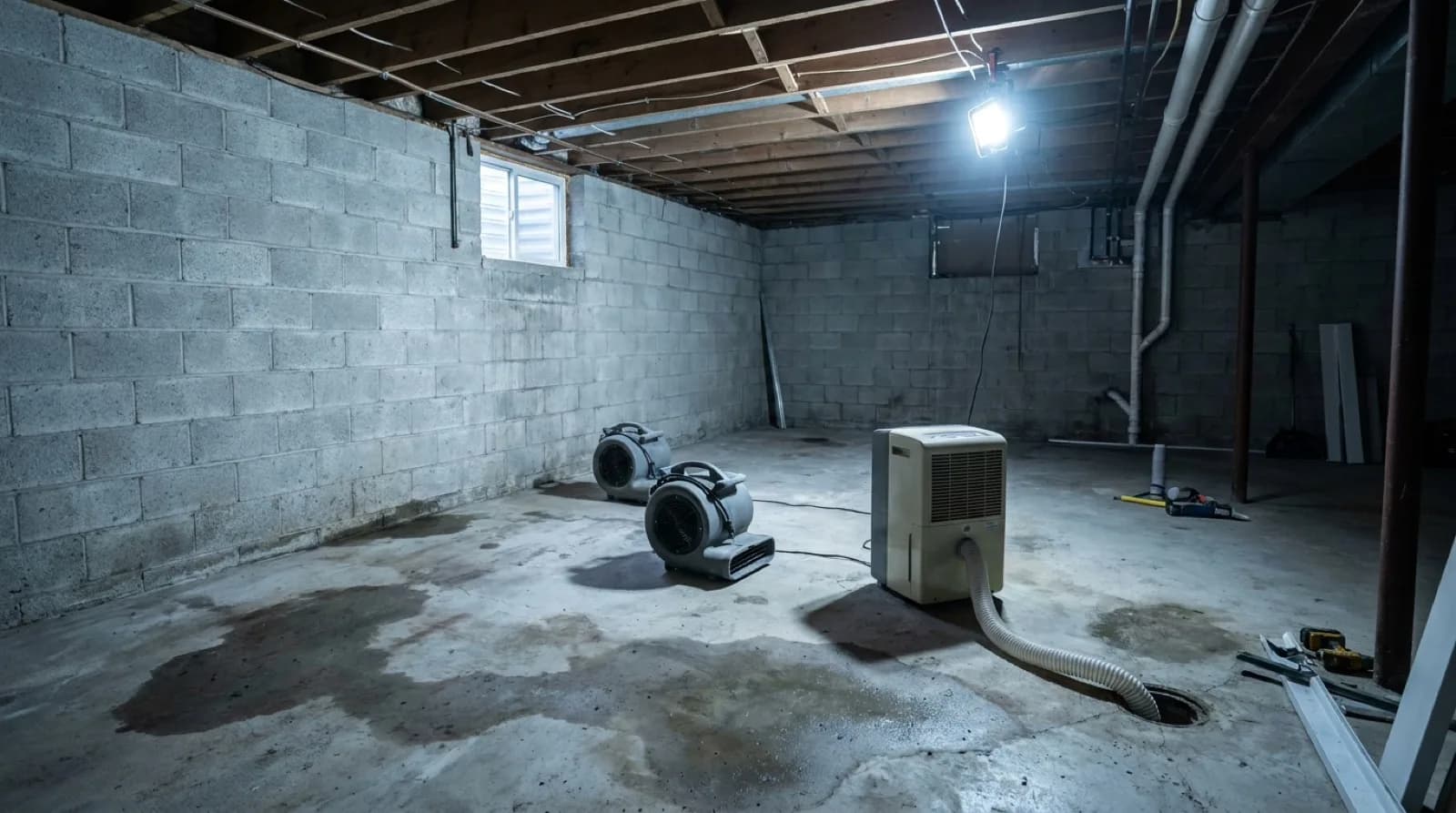
Key facts
- 01Desa Contracting prices water damage cleanup all in at $3 to $12 per square foot in Toronto, with $4 to $10 typical.
- 02DeSa Contracting's basement flood guide bills industrial air movers and dehumidifiers at $200 to $800 for each day of equipment time.
- 03The Sewer and Drain tiers sewage cleanup by contaminated area, from $2,500 to $4,000 under 100 square feet up to $7,500 to $12,000 and up over 500 square feet.
- 04This index holds no pricing at all for any of its 294 companies, so which shape a firm bills in is a question for the quote.
Per square foot, and what the rate assumes
The most quoted shape is an area rate. Desa Contracting prices water damage cleanup all in at $3 to $12 per square foot in Toronto, with $4 to $10 typical, and prices flooded basement cleanup at $4 to $12 per square foot with $7 typical. On the sewage side the rate climbs: DKI Canada publishes $7 to $8 per square foot for Category 3 black water, and Ratehub.ca uses $7 to $14 per square foot when it describes sewer-backup damage.
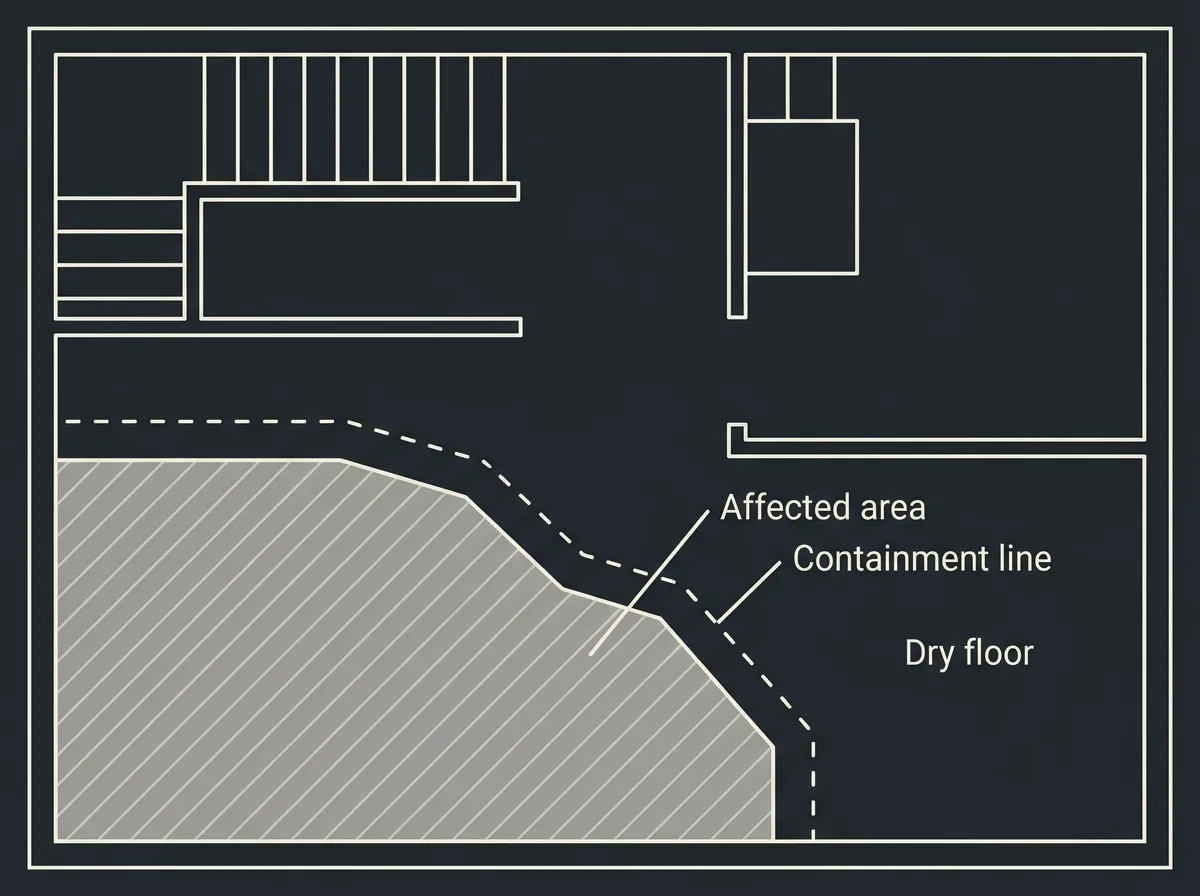
An area rate looks precise and carries one hidden input, which is the area. The number that gets multiplied is the affected square footage a technician measured, and two firms walking the same basement can measure differently depending on where they decide the water stopped, whether they include the area behind baseboards and cabinetry, and whether unaffected rooms sharing the same air are inside the containment. A rate quoted against an unstated measurement cannot be compared with another rate at all.
The second assumption is finish level. This site's cost research treats a finished basement with drywall, carpet and furniture as several times the cost of the same footprint in unfinished concrete storage, because tear-out and rebuild enter the scope. An area rate that was quoted for exposed block and framing does not travel to a finished room, even at identical square footage.
Per equipment day, and why day one cannot know the total
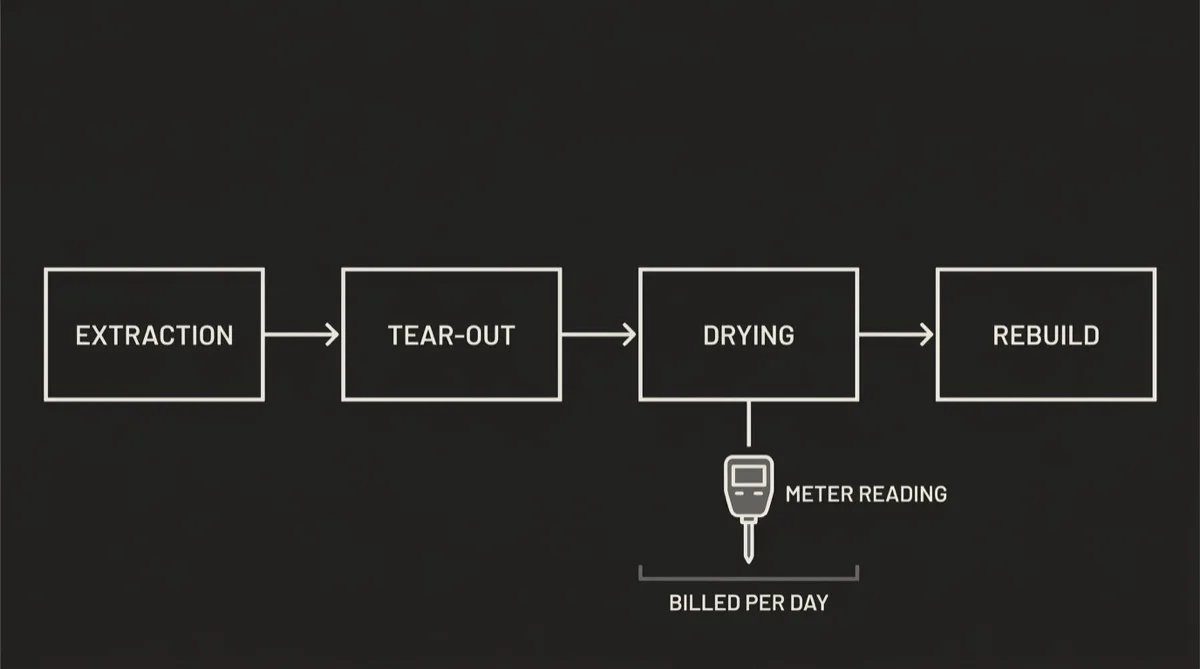
Drying is billed on a clock. DeSa Contracting's basement flood guide prices industrial air movers and dehumidifiers at $200 to $800 per day of equipment time across a typical three to five day dry-out, and prices structural drying and dehumidification as a whole at $800 to $4,000 per job. Restoration Mate prices industrial structural drying and dehumidification equipment at $1,000 to $3,500 per week on site, the same charge expressed at a different resolution.
That row is the reason a mitigation invoice can exceed its estimate without anything going wrong. Total job cost scales with the number of equipment days on site, and the machines come out on the day the moisture readings clear, which can be later than the estimate assumed. Drying typically takes 24 to 72 hours of equipment run-time on a straightforward loss, and longer where materials hold water. A quote that bundles drying into one figure removes the only number a homeowner can later check against the drying log.
The rental market gives the floor for context. DryingEquipment.ca in Toronto rents an LGR dehumidifier at $59.99 to $89.99 per day with delivery included during business hours, which is what the same machine costs without a technician, a moisture log or a warranty attached to the outcome. The gap between that and a professional per-day charge is the labour, monitoring and documentation, and it is worth naming when a quote is read.
Per job tier, and what a tier is really describing
The third shape is a package price for a scenario. The Sewer and Drain tiers sewage cleanup by contaminated area: $2,500 to $4,000 for a minor backup under 100 square feet, $4,000 to $7,500 for 100 to 500 square feet, and $7,500 to $12,000 and up for a severe flood over 500 square feet in a finished basement. Ideal Response prices minor backups slightly lower at $1,500 to $3,000, and corroborates the severe end above $8,000.
Water damage tiers by contamination instead of by size. The Sewer and Drain prices a Category 1 clean-water job, a burst supply pipe or appliance line, at $2,500 to $4,000, while Desa Contracting prices minor clean-water leaks at $1,000 to $3,000. Category 2 grey water, a washing machine or dishwasher overflow with sanitization included, runs $4,000 to $6,500 per The Sewer and Drain. Category 3 black water runs $6,000 to $12,000 and up per The Sewer and Drain, and Desa Contracting publishes $5,000 to $30,000 and up for the same class.
A tier is a bundle with an implied build. It assumes a typical basement of that size, a typical amount of contents, a typical depth of saturation and a typical amount of tear-out. When any of those assumptions is wrong, a tiered quote either grows or has to be renegotiated, which is the trade for the convenience of a single number before anyone has measured anything.
The same basement under three shapes
Take a finished basement over 500 square feet with sewage in it. Under the tier shape, The Sewer and Drain prices the cleanup at $7,500 to $12,000 and up, before rebuild. Under the area shape, Ratehub.ca's $7 to $14 per square foot means the total moves with whatever affected footage was measured, so the same job can land anywhere depending on where the tape stopped. Under the equipment shape, neither figure is final until the number of drying days is known.
The three shapes are answering different questions, and a quote usually contains more than one of them. The cleanup line may be an area rate, the drying line a daily charge, and the disinfection or disposal a flat item. Reading a quote means identifying which shape governs which row, because only then does the question become answerable: how many square feet, how many days, and which category.
Rebuild sits outside all three. DESA Contracting prices the water damage rebuild phase alone at $1,000 to $20,000 and up, and Restoration Mate prices full reconstruction after a severe fire at $200 to $500 per square foot. This site's cost research treats reconstruction as frequently exceeding the cleanup cost itself, which is why comparing a cleanup-only number against an all-in number reliably produces the wrong conclusion about which firm is cheaper.
What the shape tells you about the quote
A firm that leads with an area rate is telling you it intends to measure, and that its number will move when the measurement does. A firm that leads with a tier is telling you it has priced this scenario before and is willing to carry some of the variance. A firm that itemizes equipment days is telling you the duration is genuinely unknown and will be evidenced.
None of the three is inherently better, and all three sit on the same underlying drivers: water category, affected area, finish level, contents volume and elapsed time before mitigation began. Ontario then adds 13% HST on top, because contractor pricing in the province is quoted before tax. The comparison that works is forcing both quotes into the same shape by asking for the measured area, the assumed number of equipment days and the water category in writing.
What this index can add
Of the 294 companies in this index, 258 carry the water damage restoration category, 37 carry basement flood cleanup and 30 carry sewage backup cleanup. All 30 of the sewage-tagged companies also carry water damage restoration, which fits how the work is scoped in practice, since the category of water changes the protocol on the same loss rather than sending it to a different trade.
Those specialist tags cluster. Willowdale holds five of the 37 basement flood cleanup companies and Don Mills four, while the sewage tag is spread most thinly of the six categories across the whole index. What the index does not hold is any pricing at all: no rates, no tiers, no equipment charges for any of the 294 records. Which shape a given firm bills in is a question for the quote, and free on-site estimates are standard across GTA firms, so get two or three before agreeing to any of them.
The full tables sit on the water damage restoration cost guide, the basement flood cleanup cost guide and the sewage cleanup cost guide. The companies filed for all three services are listed together under water damage restoration, ordered by the RestorationIndex Score.
Frequently asked questions
How do Toronto restoration firms calculate a price?
- Three ways, sometimes on the same invoice. A per-square-foot rate covers the cleanup, which Desa Contracting prices at $3 to $12 for water damage. Drying equipment is billed per day, which DeSa Contracting's basement flood guide puts at $200 to $800. Job tiers cover a whole scenario, such as The Sewer and Drain's $4,000 to $7,500 for a sewage backup across 100 to 500 square feet.
Is there a water damage cost calculator that works for Toronto?
- No calculator can settle it, because the three billing shapes take different inputs. A per-square-foot rate needs a measured affected area, an equipment charge needs a number of drying days nobody knows on day one, and a tier needs a category of water and a finish level. Published ranges are anchors for a conversation, and the inputs have to be agreed before any total means anything.
Why is drying billed separately from cleanup?
- Because it runs on a clock. DeSa Contracting's basement flood guide prices equipment time at $200 to $800 per day across a typical three to five day dry-out, and Restoration Mate prices industrial structural drying equipment at $1,000 to $3,500 per week on site. Moisture readings decide when the machines leave.
What does water category do to the price?
- It changes the tier the job falls into. The Sewer and Drain prices a Category 1 clean-water job at $2,500 to $4,000, a Category 2 grey-water job at $4,000 to $6,500 and a Category 3 black-water job at $6,000 to $12,000 and up. Category 3 forces removal and disposal of porous materials rather than drying them in place.
Does a per-square-foot rate cover the rebuild?
- Usually not. The cleanup rate covers extraction, tear-out, drying and antimicrobial treatment. DESA Contracting prices the rebuild phase alone at $1,000 to $20,000 and up, and Restoration Mate prices full reconstruction after a severe fire at $200 to $500 per square foot. Ask which side of that line each figure sits on before comparing two quotes.
Figures on this page, and where each one comes from
Water damage cleanup in Toronto runs $3 to $12 per square foot all in, with $4 to $10 typical; flooded basement cleanup runs $4 to $12 per square foot with $7 typical.
Desa Contracting Toronto guide, via this site's water damage cost research
Industrial air movers and dehumidifiers cost $200 to $800 for each day of equipment time, across a typical three to five day dry-out.
DeSa Contracting basement flood guide, via this site's flooded basement cleanup cost research
Sewage cleanup is tiered by contaminated area: $2,500 to $4,000 under 100 square feet, $4,000 to $7,500 for 100 to 500 square feet, and $7,500 to $12,000 and up over 500 square feet in a finished basement.
The Sewer and Drain (Toronto), via this site's sewage cleanup cost research
An LGR dehumidifier rents at $59.99 to $89.99 per day in Toronto and the GTA, delivery included during business hours.
DryingEquipment.ca, via this site's water damage cost research
Full reconstruction after a severe fire runs $200 to $500 per square foot; the water damage rebuild phase alone runs $1,000 to $20,000 and up.
Restoration Mate and DESA Contracting, via this site's cost research
Keep reading
Check a company before you call it
Every profile on RestorationIndex carries the hours the firm posts, its public Google review record and a quote request.
Open the directory