What has to be thrown out after sewage
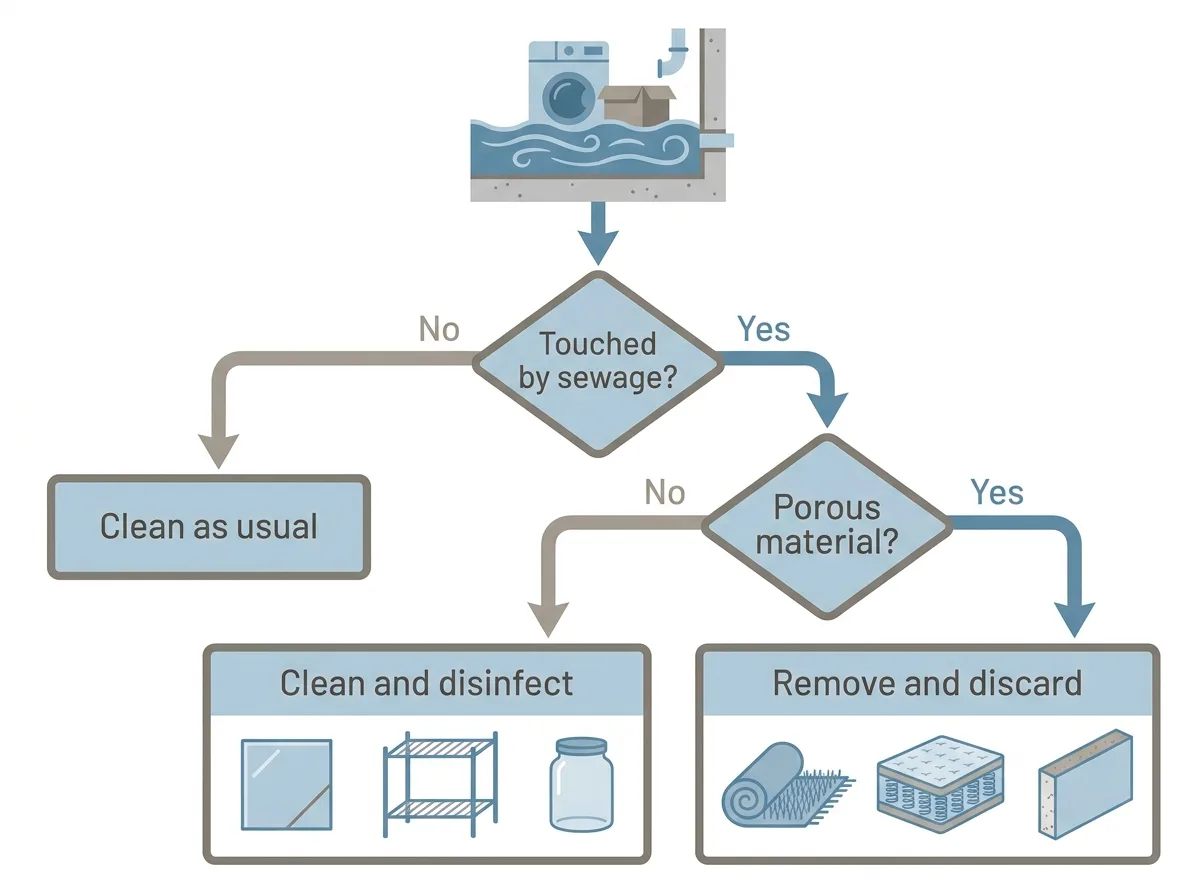
Anything porous that sewage touched and that cannot be dried has to go, from carpet to drywall. The Sewer and Drain, a Toronto firm, calls sewage Category 3 water and removes porous materials under the trade's IICRC standards. The City of Toronto says to discard any contaminated item that cannot be washed and disinfected.
Page last updated: By The RestorationIndex Desk
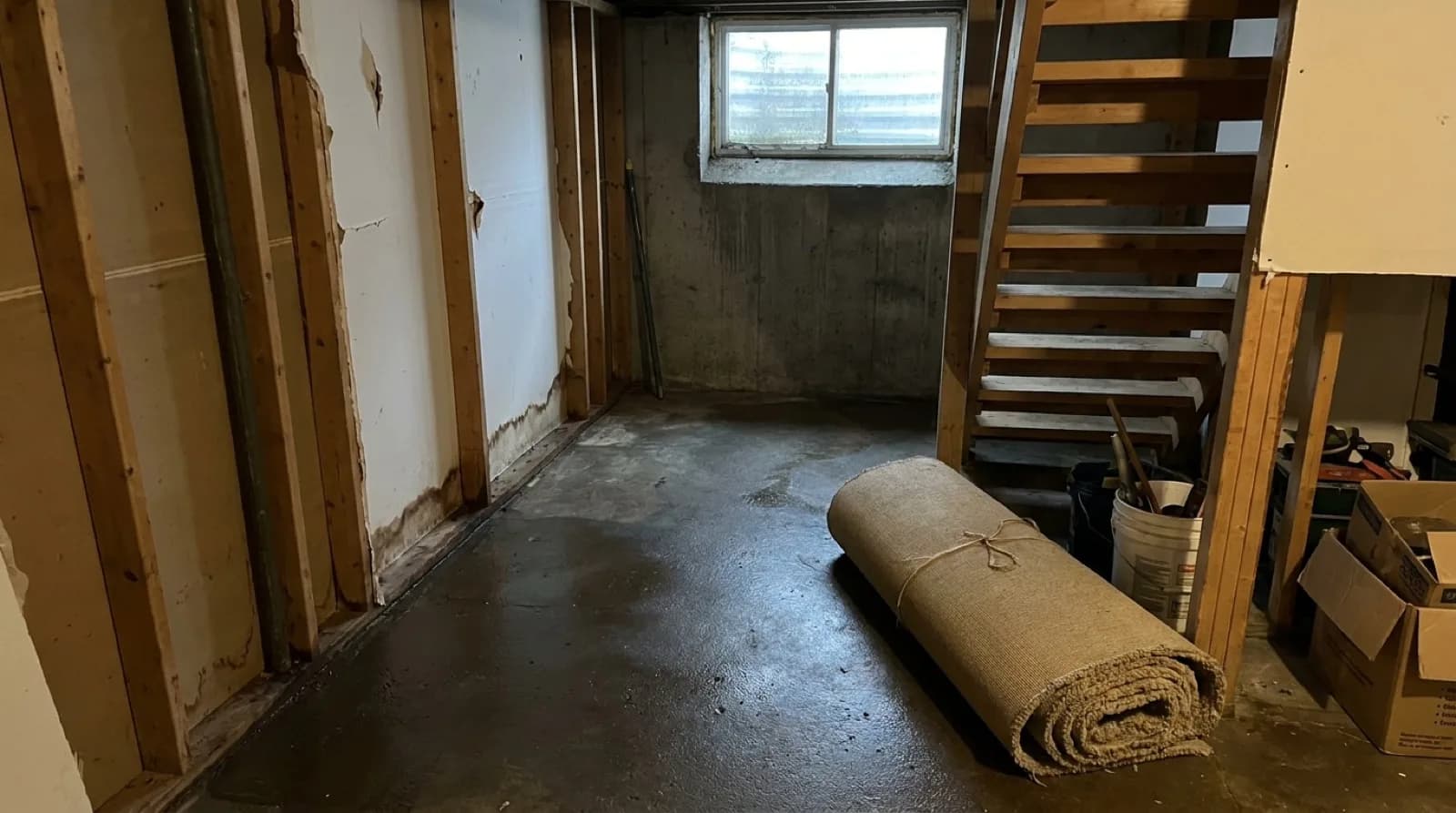
Key facts
- 01The Sewer and Drain calls sewage Category 3 water, the most hazardous class, and removes porous materials under IICRC standards.
- 02Health Canada's flood list runs from insulation and drywall to mattresses and cushions that cannot be dried.
- 03Sewage causes mould growth within 24 to 48 hours when materials stay wet, The Sewer and Drain says.
- 04The Insurance Bureau of Canada advises taking photos and keeping a record of everything you discard for an insurance claim.
The rule that decides what stays
The Sewer and Drain, a Toronto firm, calls sewage Category 3 water, the most hazardous classification of water contamination. Its technicians remove porous materials following the standards of the IICRC (the Institute of Inspection, Cleaning and Restoration Certification, the trade's standards body).
Health Canada's flood clean-up advice says to dispose of insulation, drywall, carpets, particleboard furniture, mattresses, pillows, cushions and furniture coverings that flood water reached and that cannot be dried. The City of Toronto says to discard drywall and insulation contaminated with sewage, and any contaminated item that cannot be washed and disinfected.
The list is set by what the water touched, not by what an item is worth. A cushion that sat in sewage for an hour goes in the same bin as the carpet beneath it.
The City of Toronto also says to discard any food that may have touched flood water. Health Canada says soaked flooring should be removed, and Flood Assist says personal items, electronics and HVAC systems are often irreparable. For clothing, solid wood furniture, appliances and papers, these sources set no rule, so settle each one with the insurer or the contractor.
Is pumping out the water enough after a sewage backup?
No. Pumping the water out is the first step of a sewage job, not the job. On a sewage loss, The Sewer and Drain removes the porous materials as well.
Some Toronto price lists show the steps as separate lines. Desa Contracting's Toronto water damage cost guide is one. Water extraction runs $500 to $3,000. Material removal (drywall, flooring) also runs $500 to $3,000. Structural disinfection and deodorizing runs $200 to $1,000. The Sewer and Drain instead tiers the whole sewage job by contaminated area. A minor backup affecting 100 square feet averages $2,500 to $4,000. One spreading across 100 to 500 square feet costs $4,000 to $7,500. Severe flooding over 500 square feet costs $7,500 to $12,000 or more.
A low number that covers extraction only is not comparable with a tiered number that covers the tear-out as well. The full set of ranges sits on the sewage cleanup cost page.
Finished basements are where the list gets long
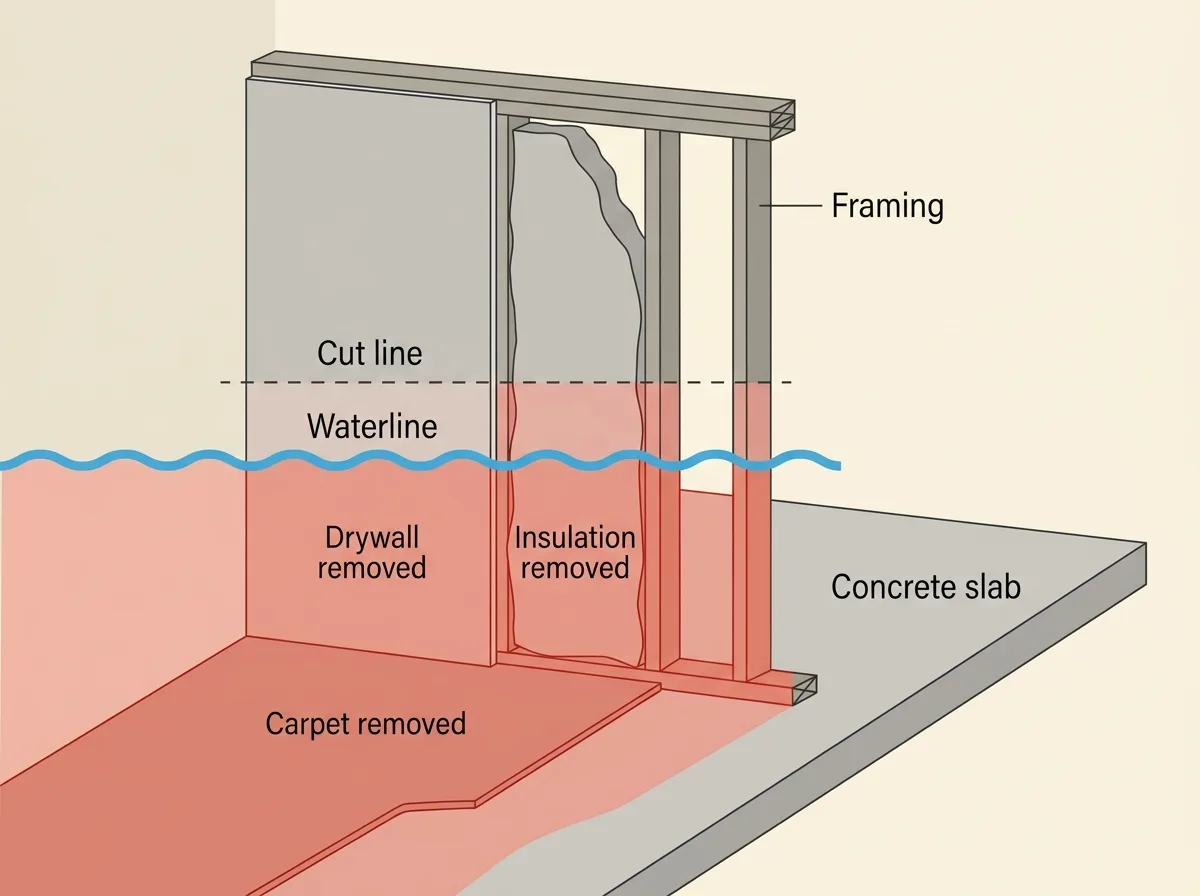
A bare concrete basement has less to tear out, because bare concrete is on none of the discard lists above. A finished basement is the opposite case. Flood Assist says that in severe cases it removes and disposes of porous materials like carpets or drywall. Each finish installed below the waterline is one more thing that may have to go.
Published ranges are wide. Flood Assist puts sewage backup cleanup in Toronto at $5,000 to $50,000 depending on severity. For water damage in general, Restoration Mate says a full basement costs about $5,000 to $25,000.
The tear-out has to happen now. The rebuild can be quoted separately once the space is clean and dry. Rebuild ranges sit on the flooded basement cleanup cost page.
Mould can start within 24 to 48 hours
Elapsed time is the variable the homeowner controls. The Sewer and Drain says sewage backup causes mould growth within 24 to 48 hours when contaminated materials stay wet. Flood Assist says growth can begin within 24 hours in Toronto's humid climate. Citing the Canada Mortgage and Housing Corporation (CMHC), Flood Assist puts mould remediation at $1,500 to $15,000 per incident; it does not link CMHC's own figure.
That remediation bill arrives on top of the original cleanup. Mould pricing across the GTA, once a job reaches that stage, sits on the mould removal cost page.
Documenting before the bin arrives
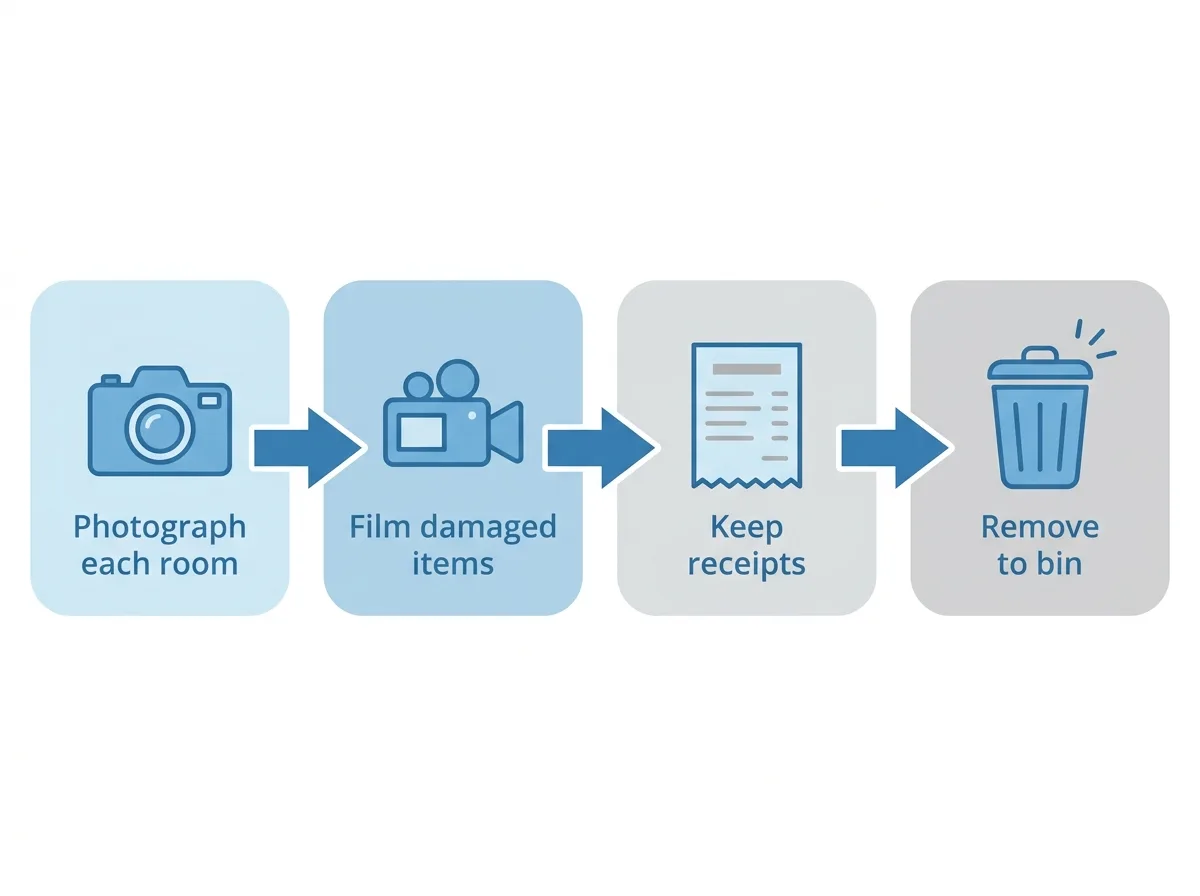
Everything on the discard list is also evidence for a claim, and it stops being evidence once it is in a bin. The Insurance Bureau of Canada tells flooded homeowners to take photos and keep a record of everything they discard, and to keep all receipts related to cleanup.
That means a record of each item before it leaves: what it is, where it sat, and how high the water reached it. The order of the first few hours, including what to photograph and when to call the insurer, is set out in the first six hours after a basement flood.
Coverage is a separate question from the cleanup. The Insurance Bureau of Canada says basement water damage from a sewer backup is only covered if you bought optional sewer backup coverage. Ratehub.ca says that coverage typically costs $150 to $300 per year. Which endorsement (an optional add-on to a home insurance policy) pays for which kind of water is explained in sewer backup or overland water coverage.
What disposal costs, and who is listed for the work
If you haul debris yourself after the crew has disinfected, you need a bin. Bins Toronto's 2026 price guide says rental runs from $275 for a compact 4-yard bin to $650 for a 30-yard container. More on what leaves the house is in the guide to clean, grey and black water.
Clearing the blockage that caused the backup is a separate trade and a separate invoice. Anta Plumbing, a Toronto plumber, puts the cost of snaking a main sewer line at $250 to $600, and more for complex cases.
In this index, 30 of the 294 companies are listed under sewage backup cleanup. Every one of them is also listed under water damage restoration, and 25 under mould removal too. The sewage hub was merged into water damage restoration, where those companies now appear. Lemarg Restoration, in Vaughan, is listed under water damage restoration, mould removal and sewage cleanup, rated 4.9 across 91 reviews. Toronto Wide Restoration Corporation is listed under water damage restoration, basement flood cleanup and sewage cleanup, rated 4.0 across 20 reviews.
Each profile shows the rating, the review count, the hours and a quote request. The records hold no certification, licence or insurance field, so which materials a firm plans to remove is a question for its written quote.
How this page was made: the RestorationIndex Desk compiled it from public Google Maps records and the named sources above. RestorationIndex orders listed companies by a published formula, sells no placement, and passes each quote request to one of the highest-scoring companies listed in the requester's area.
Frequently asked questions
What has to be thrown out after a sewage backup?
- Health Canada names insulation, drywall, carpets, particleboard furniture, mattresses, pillows and cushions among the flood-soaked items to dispose of when they cannot be dried. The City of Toronto adds any food the water may have touched. Photograph each item before it goes, because the record supports an insurance claim.
Can anything in a sewage-flooded basement be saved?
- Yes, if it can be washed and disinfected. The City of Toronto's discard rule covers contaminated items that cannot be, so ask of each item whether a full wash is possible. For clothing, solid wood, appliances and papers, agree each item with your insurer or contractor first.
What does disposal cost if I haul the debris myself?
- Bins Toronto's 2026 price guide puts Toronto bin rental at $275 for a compact 4-yard bin, up to $650 for a 30-yard container. Before renting one, ask the restoration firm whether its quote already covers hauling the contaminated material away, so you do not pay for disposal twice.
How fast do I have to act after a sewer backup?
- Start within a day or two. Health Canada says a house and its furnishings are less likely to grow mould if they are dried within 48 hours. The tear-out is the part that cannot wait. Mould removal would be a second bill on top of the cleanup.
How much does sewage cleanup cost in a Toronto basement?
- It depends mostly on how much floor the sewage covered. The Sewer and Drain tiers its Toronto prices by that area, from about 100 square feet up to more than 500. Flood Assist gives a wider range of $5,000 to $50,000, depending on severity. Ask whether each quote includes tear-out and hauling.
Figures on this page, and where each one comes from
A minor sewage backup affecting 100 square feet averages $2,500 to $4,000, 100 to 500 square feet costs $4,000 to $7,500, and severe flooding over 500 square feet $7,500 to $12,000 or more. Sewage backup causes mould growth within 24 to 48 hours when contaminated materials remain wet; porous materials are removed following IICRC standards for Category 3 water, the most hazardous classification of water contamination.
Sewage backup cleanup costs range from $5,000 to $50,000 depending on severity; personal items, electronics and HVAC systems are often irreparable.
Mould growth can begin within 24 hours in Toronto's humid climate. Flood Assist cites CMHC for mould remediation costs of $1,500 to $15,000 per incident, without linking CMHC's page.
Water extraction $500 to $3,000; material removal (drywall, flooring) $500 to $3,000; structural disinfection and deodorizing $200 to $1,000.
Water damage repair for a full basement costs about $5,000 to $25,000.
Toronto bin rental typically runs from $275 for a compact 4-yard bin to $650 for a 30-yard container.
Snaking a main sewer line costs $250 to $600, and more for complex cases.
Sewer backup coverage typically costs $150 to $300 per year.
Take photos and keep a record of everything you discard for your insurance claim, and keep all receipts related to cleanup. Basement water damage from sewer backup is only covered with optional sewer backup coverage.
Dispose of all insulation materials, drywall, carpets, particleboard furniture, mattresses, box springs, stuffed toys, pillows, cushions and furniture coverings that have been exposed to flood water and cannot be dried. Flooring soaked by flood water should be removed and discarded. A house and furnishings are less likely to grow mould if dried within 48 hours.
Health Canada, Flood cleanup: keep in mind indoor air quality
Discard all contaminated items that cannot be washed and disinfected; remove and discard drywall and insulation contaminated with sewage or flood waters; discard food that may have come in contact with flood waters.
ANSI/IICRC S500 is the IICRC's Standard for Professional Water Damage Restoration.
Keep reading
Check a company before you call it
Every profile on RestorationIndex carries the hours the firm posts, its public Google review record and a quote request.
Open the directory